PR This post contains affiliate links. We only share books our family has read together. この記事にはアフィリエイトリンク(広告)を含みます。紹介するのは、我が家で実際に読んだ本だけです。 How we choose books / 絵本の選び方 →
"Have you seen my cat?" "This is not my cat!" A boy travels the world looking for his cat, and finds lions, tigers and pumas instead.
「ぼくの ねこ みなかった?」「これは ぼくの ねこじゃない!」世界中でねこを探す男の子が出会うのは、ライオンやトラやピューマでした。
A short, repeated question is a phrase your child can actually use. Kids who learn it in a story start saying it in real life, and that is when language comes alive.
短い問いかけの繰り返しは、子供が実際に使えるフレーズになります。お話で覚えた言葉を毎日の生活で使い始めた時、言葉は本当に自分のものになります。
- Author / 作者
- Eric Carle(エリック・カール)
- Ages / 対象年齢
- Ages 2-5
2〜5歳ごろ - Languages / 言語
- English & Japanese editions / 日本語版・英語版あり
What’s the story? / どんなお話?
A boy’s cat has gone missing, so he sets off to find it. Everywhere he goes, he asks, “Have you seen my cat?” and people point him to a lion, a tiger, a cheetah, a puma… “This is not my cat!”
いなくなったねこを探して、男の子は旅に出ます。行く先々で「ぼくの ねこ みなかった?」と聞くと、教えてもらえるのはライオン、トラ、チーター、ピューマ…。「これは ぼくの ねこじゃない!」
Each big cat lives in a different part of the world, and the people the boy meets come from those places too. At last, he finds his own cat, with a happy surprise.
それぞれのネコ科の動物は世界のいろいろな場所に住んでいて、男の子が出会う人たちもその土地の人たちです。最後には、うれしいおまけつきで自分のねこが見つかります。
Perfect for… / こんな子・こんな時におすすめ
- Cat lovers and animal lovers
- Kids starting to wonder about other countries
- Very short read-alouds with lots of repetition
- ねこ好き・動物好きの子
- 世界の国に興味が出てきた子
- 繰り返しの多い、短い読み聞かせに
How to use it in bilingual parenting / バイリンガル育児での使い方
Bring out a world map and find where each big cat lives. Then play a hide-and-seek game at home with a stuffed animal: “Have you seen my teddy?” in Japanese.
世界地図を出して、それぞれの動物が住んでいる場所を探してみましょう。家ではぬいぐるみを隠して「ぼくの くまさん みなかった?」と探しっこするのも楽しいです。
Try saying this after reading / 読んだあとに言ってみよう
Good to know / 知っておきたいこと
The book was first published in the 1970s, so some of the clothing and scenes look old-fashioned. It can be a nice chance to talk about how the world has changed.
1970年代に出た本なので、人々の服装や風景に少し古さを感じるところもあります。「今はどうかな?」と話すきっかけにもなります。
Our family’s story / 我が家のエピソード
A friend who knows how much I love cats gave me this book for my birthday. With a repeated phrase, it introduces all kinds of members of the cat family.
ネコ好きの私を思い出して、友達が誕生日に送ってくれた本です。同じフレーズを繰り返しながら、ネコ族の種類を紹介してくれます。
I like that the boy is actually talking with the people who live where each animal lives. We once got out a world map and talked about where each animal lives.
ちゃんとその動物の住んでいる地域の人達と話しているのが、いいです。世界地図を出してきて、この動物はここに住んでいるんだね、などと話をしたこともありました。
Sometimes when we’re looking for something, the phrase just slips out, and parent and child end up chatting all over again.
時々何か探している時にこのフレーズが口をついて出てきちゃうので、親子でまた会話が弾んでしまいます。
Get the book / 購入リンク
Affiliate links: we may earn a small commission, at no extra cost to you. アフィリエイトリンクです。購入者の負担が増えることはありません。
- Have You Seen My Cat? (English edition, Amazon.com) / 英語版 →
- ぼくの ねこ みなかった? (Japanese edition, Amazon.co.jp) / 日本語版 →
ライオン, トラ, チーター: many animal names in Japanese are written in katakana. Our katakana workbook is the next step after hiragana.
ライオン、チーター、ピューマ。動物の名前にはカタカナがたくさん。ひらがなの次は、カタカナの練習帳で。
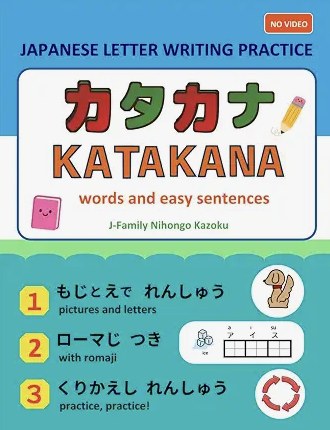
Practice katakana words and simple sentences that mix katakana and hiragana. The next step after hiragana, in the same J-Family Nihongo Kazoku series.
View on Amazon →As an Amazon Associate, Japanese Family earns from qualifying purchases.
Amazonのアソシエイトとして、Japanese Familyは適格販売により収入を得ています。 How we choose books / 絵本の選び方