PR This post contains affiliate links. We only share books our family has read together. この記事にはアフィリエイトリンク(広告)を含みます。紹介するのは、我が家で実際に読んだ本だけです。 How we choose books / 絵本の選び方 →
A tree that gives a boy everything she has, for his whole life. Kids hear a simple story; grown-ups often find themselves with a lump in their throat.
少年に、一生をかけてすべてを与え続ける木。子供にはシンプルなお話、大人には胸がじんとするお話です。
Some books are worth reading in both languages because the translations feel different. Comparing them is a natural way for older kids to think about words and meaning.
翻訳によって印象が変わる本は、両方の言葉で読む価値があります。読み比べることは、大きくなった子が言葉と意味を考える自然なきっかけになります。
- Author / 作者
- Shel Silverstein(シェル・シルヴァスタイン)
- Ages / 対象年齢
- Ages 4 and up (still read in elementary school)
4歳ごろ〜(小学生になっても読める) - Languages / 言語
- English & Japanese editions / 日本語版・英語版あり
What’s the story? / どんなお話?
A tree loves a little boy. He climbs her trunk, eats her apples and sleeps in her shade. As he grows up, he wants more, and the tree gives him her apples, her branches and finally her trunk.
1本の木が、小さな男の子を愛していました。男の子は木に登り、りんごを食べ、木かげで眠ります。大きくなるにつれて男の子はもっと多くを求め、木はりんごを、枝を、そして幹までも与えていきます。
In the end, the boy comes back as an old man, and the tree still has one thing left to give. The simple black-and-white drawings leave lots of room for your own feelings.
最後に、年をとった男の子が戻ってきたとき、木にはまだ与えられるものが一つだけ残っていました。白黒のシンプルな絵が、読む人の気持ちが入る余白を残してくれます。
Perfect for… / こんな子・こんな時におすすめ
- Older preschoolers and elementary school kids
- Talking about giving, gratitude and growing up
- Comparing the English and Japanese versions
- 年長さんから小学生の子
- 与えること、感謝、大きくなることについて話すきっかけに
- 英語版と日本語版を読み比べたい時
How to use it in bilingual parenting / バイリンガル育児での使い方
With older kids, read it in both languages and ask, “Was the tree happy?” There’s no right answer. Letting them explain their feelings in Japanese is great practice in real, thoughtful conversation.
大きくなった子とは両方の言葉で読んで、「木は しあわせだったと おもう?」と聞いてみましょう。正解はありません。自分の気持ちを日本語で説明することが、考えて話す力の練習になります。
Try saying this after reading / 読んだあとに言ってみよう
Good to know / 知っておきたいこと
People read this book very differently. Some see selfless love, others see a one-sided relationship. It also has no color, so very young kids may not ask for it often.
受け取り方が人によって大きく分かれる本です。無償の愛と読む人もいれば、一方的な関係と感じる人もいます。また色のない絵本なので、小さな子はあまり自分から持ってこないかもしれません。
Our family’s story / 我が家のエピソード
We were given this book for a second birthday. Since it has no color, the kids only brought it to me once in a while, but they were still reading it in elementary school. It’s the grown-up reading it who ends up getting a little teary.
2歳のお誕生日にいただいた本。色がないので、ぽつりぽつりとしか読んでと持ってきませんでしたが、小学生になっても読んでいた本です。読んでいる大人の方がジン…としてしまう本です。
I see there’s a newer Japanese translation by Haruki Murakami. In an Amazon review, someone wrote about one short phrase near the end, saying the tree was happy, but not really. That one phrase can change the feeling of the whole book. Reading the two languages side by side, what do you think?
新たに村上春樹さんが翻訳されたようですね。アマゾンのレビューで、最後のほうの「木はしあわせだった…でも本当はそうではなかった」という一言について書かれていました。この一言で本全体の印象がだいぶ変わるかと思います。みなさんは読み比べてみて、どう感じますか?
Get the book / 購入リンク
Affiliate links: we may earn a small commission, at no extra cost to you. アフィリエイトリンクです。購入者の負担が増えることはありません。
- The Giving Tree (English edition, Amazon.com) / 英語版 →
- おおきな木 (Japanese edition, Amazon.co.jp) / 日本語版 →
Mine and yours, whose is it: Book 3 of our textbook practices giving and sharing words in short conversations, for kids who can already read hiragana.
「わたしの」「あなたの」「だれの?」。教科書3巻では、あげる・もらうにつながる言葉を会話で練習します。ひらがなが読める子向けです。
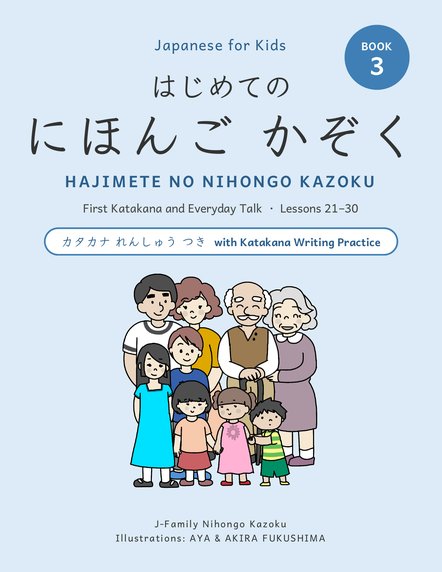
The next step after Books 1 and 2, for children who can read hiragana. Names, mine and yours, whose is it, saying "it's not", hot and cold, cheap and expensive, what you're good at and what you like, all through conversation. Children learn their first 28 katakana, plus long sounds and small tsu and yu, with writing practice.
View on Amazon →As an Amazon Associate, Japanese Family earns from qualifying purchases.
Amazonのアソシエイトとして、Japanese Familyは適格販売により収入を得ています。 How we choose books / 絵本の選び方